
The hallway track
Why the most valuable part of a conference is the part nobody plans.

The most valuable part of any conference has a name. It is called the hallway track.
The hallway track is the unscheduled conversation that happens between sessions — in corridors, at coffee, in the lunch queue — and it is where most conference deals, introductions, and partnerships are actually made. Organizers spend months on the stage and almost nothing on the hallway, which is why the most productive part of a conference is also the least designed.
What the term means
It started as a joke at technology conferences: the best talks are in the hallway. It has since become the standard term for an event's informal layer, and experienced attendees schedule around it on purpose. Some even skip sessions entirely.
Not the keynotes. Not the breakout sessions. The conversations in between.
The reason is simple. A session is one-to-many and non-interactive. The hallway is many-to-many and unscripted, making it the only part of the event where something can happen that neither party planned.
Information stopped being the reason people come
You can now deep clean your apartment and attend a conference in the same hour. The keynote is on YouTube at 1.5x, with a vacuum in your hand.
People used to buy a ticket and fly for it.
Information no longer became a reason to take time out of your schedule. Sessions, slides, the whole agenda — streamed, summarized, and posted within a day.
But there is no 1.5x for the person standing next to you at the coffee table. No summary of the conversation you never had.
The reason everyone attends is the people. Which makes it strange that the room is the one part of the event left to chance, while the agenda is planned to the minute.
Why organizers under-invest in it
Three reasons, all understandable.
It is not ownable. A keynote has a speaker, a title, and a slot. The hallway track has none of those, so it does not appear on an agenda, in a prospectus, or in anyone's job description.
It cannot be reported on. Until recently, there was no way to show what the hallway produced, so it never competed for budget against things that could be counted. Attendance and session ratings were measured; corridor conversations were not.
It feels like it works on its own. The hallway track has a reputation for magic, making it seem self-sustaining. It is not. It runs on chance, and chance has a hit rate.
The hallway track still runs on luck
You either find the right person or you do not.
There is a business card on a bathroom floor at some event right now, just sitting there. And it is a fair summary of how networking at most events actually goes.
Whose card did you get? How many stayed in your pocket? How many do you actually remember?
You walk into a room full of opportunity and leave remembering only the few who happened to stick. People put real time, money, and energy into showing up, and what they get out of it still feels random.
Then the event ends, and what follows is a graveyard of sorts. The card in your pocket. The buried contact in your phone. The follow-up that never came.
We remember a face for years and forget a name in thirty seconds. Events produce hundreds of faces; we meet a fraction of them, and we remember even fewer.
Designing for the hallway
The hallway track responds to design. Six things, roughly in order of impact.
| # | Change | Why it works |
|---|---|---|
| 1 | Make the room visible | The hallway's only real failure is not knowing who is in it. If attendees can see who is present and filter for relevance, the corridor becomes navigable rather than random |
| 2 | Build physical bottlenecks on purpose | Coffee in one place rather than four. A single route between session rooms. Density creates encounters; dispersed amenities prevent them |
| 3 | Make breaks long enough for a second conversation | Fifteen minutes allows one conversation and a rushed exit. Thirty allows a follow-up, which is where most useful outcomes come from |
| 4 | Put seating in the corridor | Standing conversations end at the first lull. A pair of chairs converts a two-minute exchange into a ten-minute one |
| 5 | Schedule the gap after the strongest session | The keynote gives the whole room a shared opening line. Wasting that on a five-minute turnaround throws away the easiest conversation starter of the day |
| 6 | Give the connections somewhere to go afterwards | A hallway conversation that ends with "let's stay in touch" and no mechanism is the business card on the bathroom floor |
Numbers two through five cost nothing but an agenda change and a floor plan. They are the cheapest improvements available to most conferences, yet they rarely get made because nobody owns the hallway.
The part software can actually help with
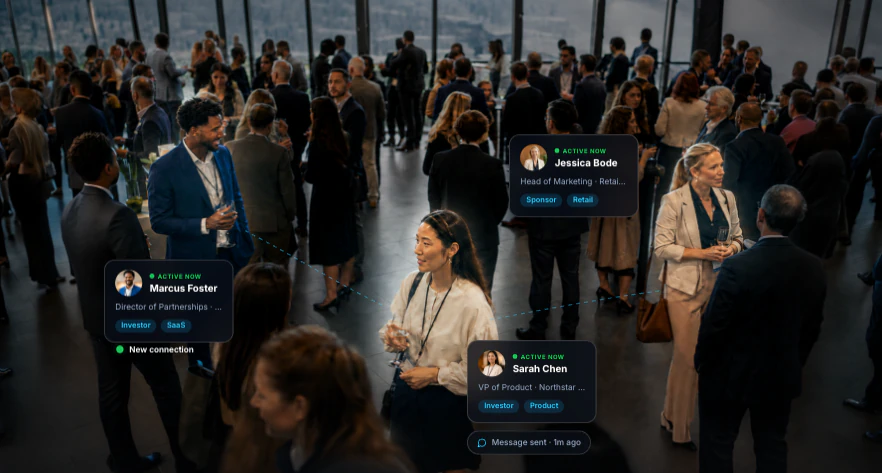
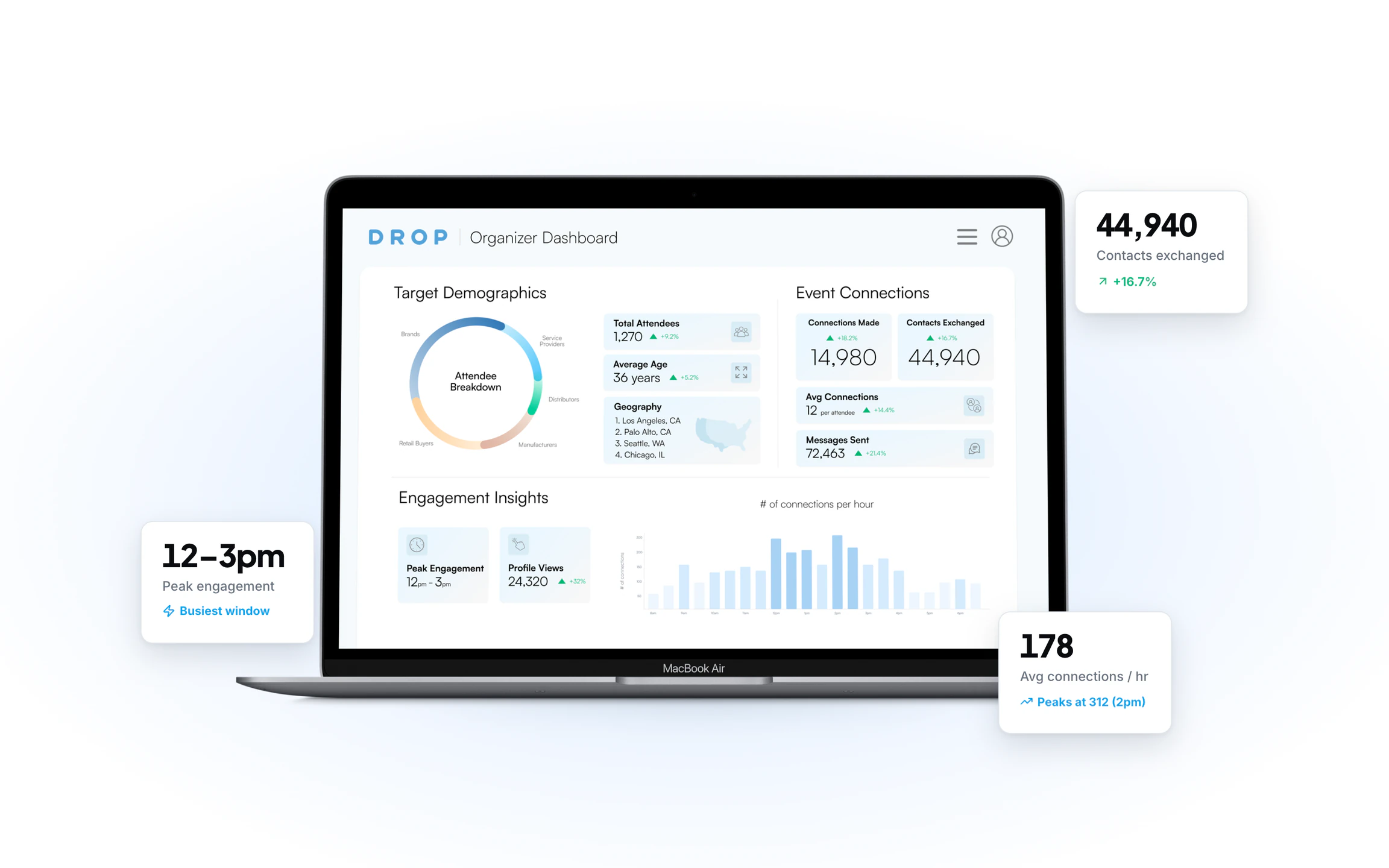
Drop Professionals is a live networking app for in-person professional events. Attendees check in and see everyone at the event, with the people nearest to them at the top of their feed. Then, organizers get a real-time dashboard of the connections, engagement, and impact their event produced.
In hallway terms, that covers two things. During the event, an attendee standing in a corridor can see who else is there and why they might be worth a minute — which turns the hallway from a lottery into a decision. After the event, the conversations, faces, and names have somewhere to continue, so the graveyard is the thing that dies.
What it does not do is replace the floor plan, the break schedule, or the chairs. Those are still yours, and they matter.
The measurement that finally makes the case
The hallway track lost every budget argument it ever had because it could not produce a number. That changes once connections are counted.
If your peak networking window falls between two sessions rather than during your scheduled mixer, that is an argument for redesigning the agenda, and it is based on data rather than instinct. The metrics are in how to measure networking at an in-person event.
Make the hallway as navigable as the agenda, and you are finally selling what people show up for.
To see what your hallway track actually produced, request a demo.
FAQs
What is the hallway track at a conference?
The hallway track is the informal, unscheduled layer of a conference — conversations between sessions, over coffee, in queues, and in corridors. The term originated at technology conferences and is now widely used to describe the part of an event where most introductions, deals and partnerships actually happen.
Why is the hallway track so valuable?
Because sessions are one-to-many and non-interactive, while the hallway is unscripted and reciprocal. Session content is now widely available online afterward; the conversation you did not have is not recoverable. For many attendees, the hallway is the reason they bought the ticket.
How can organizers improve the hallway track?
Concentrate amenities to create density, make breaks long enough for a second conversation, add corridor seating, schedule the longest gap after the strongest session, and give attendees a way to see who is present rather than guessing from name tags.
How long should conference breaks be for networking?
Long enough for a second conversation. Fifteen minutes allows one exchange and a rushed exit. Thirty minutes allows the follow-up conversation, where most useful outcomes occur. At least one break per day should be in the longer range.
Can you measure what happens in the hallway track?
Yes, if attendees are connecting through a networking layer. Connections made, contacts exchanged, and the peak connection window are all recordable, allowing organizers to see whether the corridor outperformed their scheduled networking time.

See what your hallway track produced.
Turn the conversations between sessions into connections you can count and report on.