
How to get attendees to actually network
An organizer's playbook for before, during, and after the event.
Post-event surveys have one piece of feedback that shows up again and again: more networking time.
So organizers add a cocktail hour, an extra lunch break, and an open mixer at the end. But the next survey says exactly the same thing.
More time does not fix randomness. To get attendees to actually network, you have to give them context before they have to act — who is in the room and why they are worth meeting — rather than giving them more unstructured hours to stand around. The checklist below shows how to do that at each stage.
Why more time fails
Give people an hour to network, and most spend it the same way: talking to people they already know, gravitating toward familiar faces, and hoping to run into someone valuable.
An extra hour multiplies that behavior. It does not change it.
Networking is not a time slot. Connection is not something you schedule, and for many attendees, it is the reason they came. A one-hour happy hour or an end-of-day mixer is not a fix. It is an accessory bolted onto an agenda built around the stage.
The best events do not isolate networking into a single block. They build context into the entire experience.
Day 1 and Day 2 have nothing in common
Day one of a conference: a room full of strangers, no comfort, no idea who anyone is.
Day two: faces are familiar, a few connections have been made, and conversations start easily.
Same room. Same people. The only thing that changed was the context.
Here’s the problem: most events last just one day. You get one shot at the room, going in cold and relying on chance.
A networking strategy exists to make day one feel like day two. Everything that follows serves that purpose.
The first ten minutes decide the room
The most important part of an event is the part where nothing happens. The first ten minutes.
Before the groups form. Before conversations lock in. Before the room settles. It is the one moment when the whole room is still open.
And it is when people hesitate most, because nobody knows where to start.
Most agendas treat that window as a logistical gap—badge pickup, coffee, finding your seat. But those ten minutes shape the rest of the day, and they’re usually left unmanaged.
The checklist
Before the event
- Open the attendee list to attendees at least 48 hours in advance, so they arrive with names in mind rather than discovering the room cold.
- Ask one registration question that is useful to other attendees: what are you hoping to find here? Not "how did you hear about us." That answer is what makes a profile worth filtering on.
- Email attendees a short prompt three days out: pick three people you want to meet. Three is a number people act on. "Network with industry leaders" is not.
- Brief speakers and panelists that they are part of the room, not visitors. The highest-value attendees are often the least available.
- Write the one sentence your registration desk will say. Do not let them improvise.
During the event
- Treat the first ten minutes as programming. Staff it, structure it, and give people something to do other than stand by the coffee.
- Make the room visible from the start. Attendees should be able to see who is present, with the closest first, rather than guessing from name tags.
- Have the host say one line from the stage before the first break, naming how to find someone specific.
- Put breaks where the room is actually ready, not where the agenda template puts them. If you have networking data from a previous event, the peak window indicates it.
- Keep at least one break long enough for a second conversation. Fifteen minutes allows for one. Thirty minutes allows for a follow-up.
- Seat deliberately where you can. Assigned lunch tables, mixed by segment, produce more cross-group contact than open seating, which sorts itself into groups of people who already know each other.
- Give the quiet expert a path. The format should not reward the most comfortable performers — see the hallway track.
After the event
- Give attendees a way to see who they met, and who they did not. Most of the value of a room is realized in the week after.
- Resend the attendee list or network access within 48 hours, while names are still fresh in everyone’s mind.
- Measure what happened rather than asking how it felt. The eight metrics are in how to measure networking at an in-person event.
- Report networking outcomes to sponsors within a week, as covered in the sponsor renewal conversation.
- Use the peak window to redesign next year's agenda. This is the one finding that compounds.
Fifteen minutes of homework that looks like a knack for rooms
At an event recently, someone asked Marlene, Drop's Director of Client Success, how she already knew half the room.
She hadn’t. On the Uber ride, she’d scrolled through Drop and picked three names so she’d have an opening line ready for each before she walked in.
By the time she said hi, working a room seemed natural to her. It was fifteen minutes of homework in LA traffic.
That is the behavior worth designing for. Most people walk in hoping the right person finds them, when they could walk in knowing who to look for. The difference is not confidence. It is information, and the organizer controls whether attendees have it.
Stop selling serendipity
Every event sells the chance encounter, the lucky run-in, and the conversation that changes everything. It sounds good in a prospectus.
Strip away the romance, and what remains is unmanaged randomness. The connections left to chance aren’t trivial: the deal that never gets made, the partnership that never begins, the hire who leaves without ever being met.
The randomness gets romanticized because admitting that luck determined the event’s most valuable part sounds worse.
Magic is a nice way to put it. You don’t leave money to magic—you design for it.
What this looks like with a live network
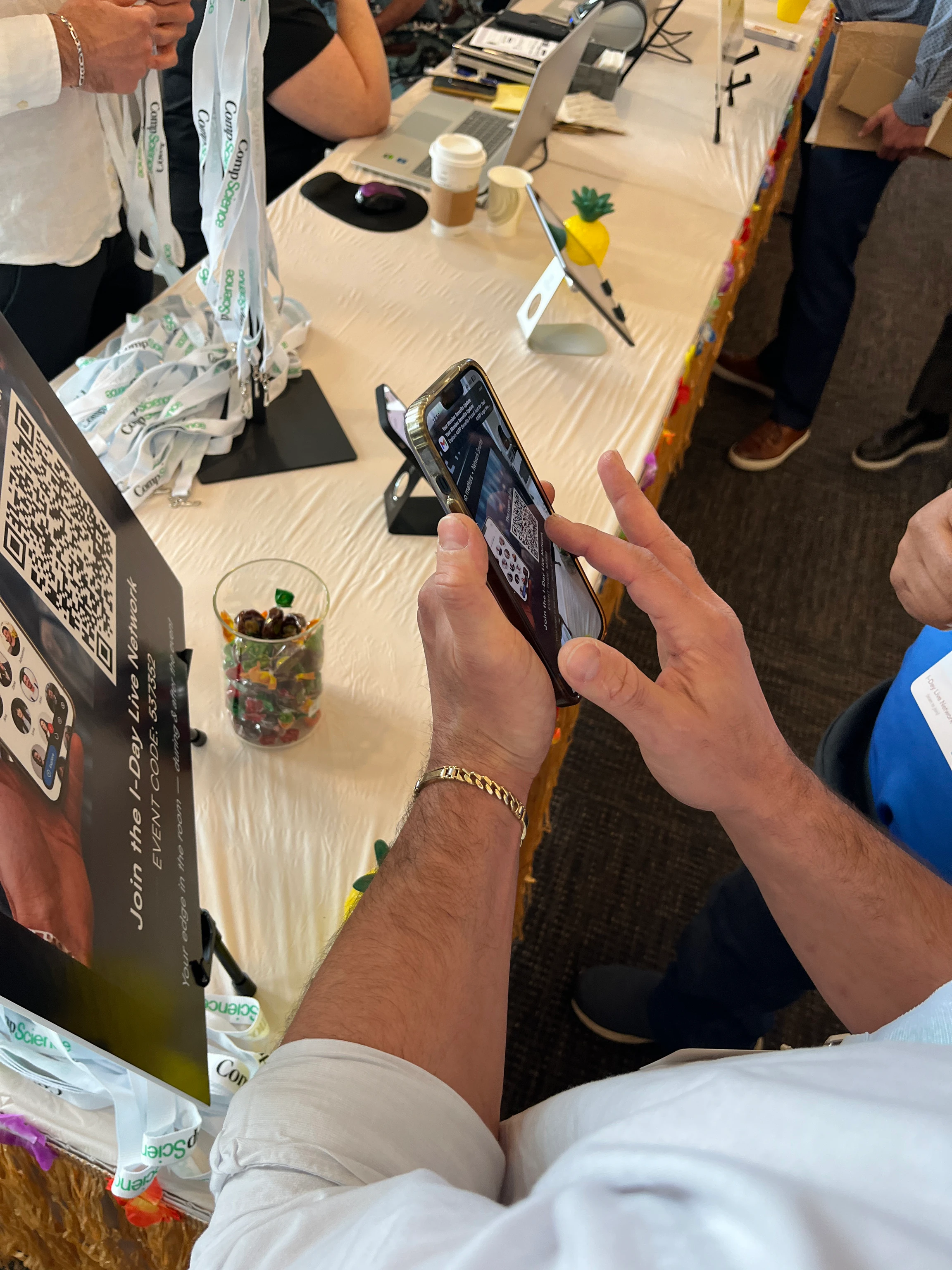
Drop Professionals is a live networking app for in-person professional events. Attendees check in and see everyone at the event, with the people nearest to them at the top of their feed. Then, organizers get a real-time dashboard of the connections, engagement, and impact their event produced.
In checklist terms, it covers the items that need the room to be visible: arriving with names in mind, seeing who is present during the event, and keeping the connections afterwards. The seating, the agenda and the one sentence at the desk are still yours.
To see how this changes your floor, request a demo.
FAQs
How do you encourage networking at an event?
Give attendees context before they have to act. Open the attendee list in advance, ask a registration question that benefits other attendees, prompt people to select three names before arriving, treat the first ten minutes as programming, and keep the room visible throughout the event. Adding unstructured time does not change behavior.
Why do attendees keep asking for more networking time?
Because unstructured networking feels unproductive, asking for more time is the easiest request. The underlying problem is usually a lack of context about who is in the room, not a lack of hours. Organizers who add time typically get the same feedback the following year.
What are the best networking formats for conferences?
Formats that reduce the cost of starting a conversation: assigned mixed seating at meals, a structured first-ten-minute activity, breaks long enough for a second conversation, and giving attendees visibility into who is present. Open mixers without context tend to sort people into groups they already know.
When is the best time to schedule networking at an event?
Where your room is most active is often not where the agenda template places it. If you have networking data from a prior event, the peak connection window shows you. Without data, the first ten minutes and the break immediately after the opening keynote are the most reliable.
How do you help shy or introverted attendees network?
Eliminate the need to work the room. If attendees can see who is present and why they are relevant before approaching, the burden shifts from social confidence to simple preparation. Scripted openers, assigned seating, and a visible attendee list help more than encouragement does.

Make day one feel like day two.
See how a live, visible room gets attendees networking from the first ten minutes.